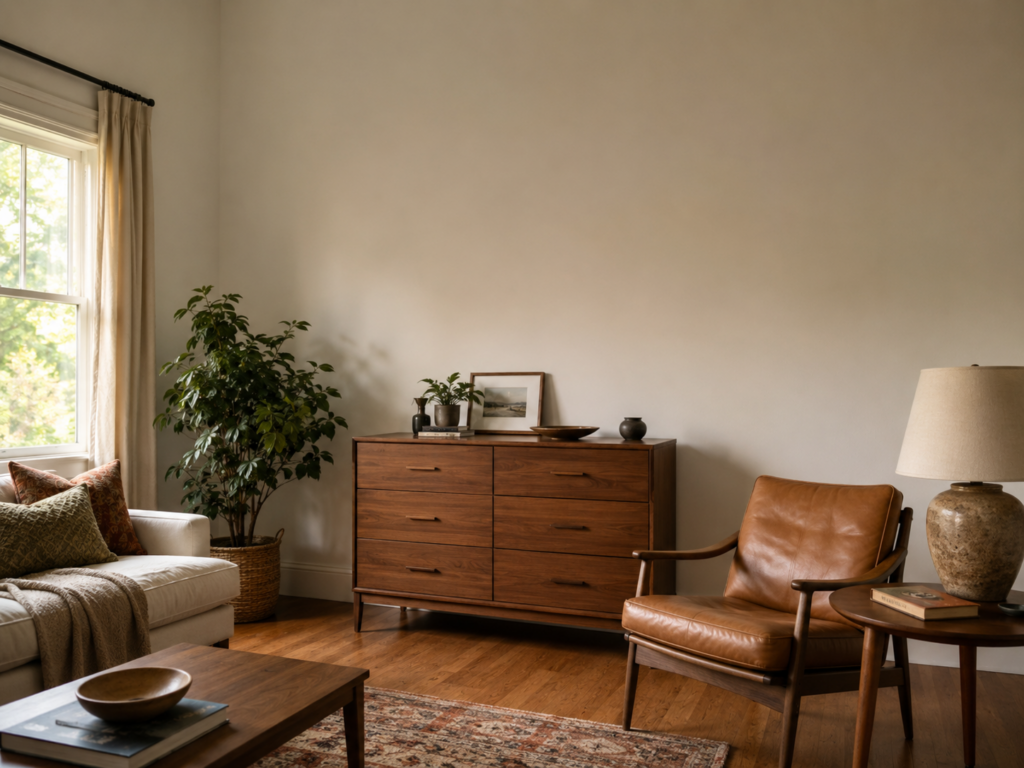
It Is Not Just Inconvenient. It Is Exhausting.
You list a dresser on Saturday. By noon, you have a pile of “Is this still available?” messages. A few people ask you to hold it. One schedules a pickup and never arrives. Another agrees to the price, inspects it in your driveway, and starts bargaining again.
That experience is common because a public listing makes you the customer-service desk, scheduler, photographer, salesperson, and pickup coordinator. The furniture may be worth selling, but the process can make donating it feel easier.
There is also a personal-safety question. Large furniture usually cannot meet in a coffee-shop parking lot. A buyer may need to come to your home, bring another person, and enter a garage or room. You should decide how that will work before—not after—a stranger asks for your address.
A successful furniture sale starts by reducing uncertainty: show the whole piece, disclose the flaws, state the terms, and plan the pickup before anyone commits.
Choose the Route That Fits the Piece
Not every item deserves the same selling process. A designer chair, an everyday sofa, and a roomful of mixed furniture call for different approaches.
Public marketplace
Broad reach and direct control over the price, along with the most messages, screening, and scheduling.
Maximum reach · Maximum noiseConsignment
The shop handles the customer, but it decides what to accept, keeps part of the sale, and may require delivery.
Less interaction · Slower payoutDonation
Useful when time matters more than payment, though some organizations decline oversized or upholstered pieces.
Simple · No sale proceedsLocal buyer network
Shows the furniture to buyers whose interests and service areas match. Useful for bulky pieces, multiple items, and sellers who value speed.
Focused reach · Direct offersGive Buyers Enough to Decide
The best listing is not the longest one. It answers the practical questions that determine whether a buyer can use, move, and resell the piece.
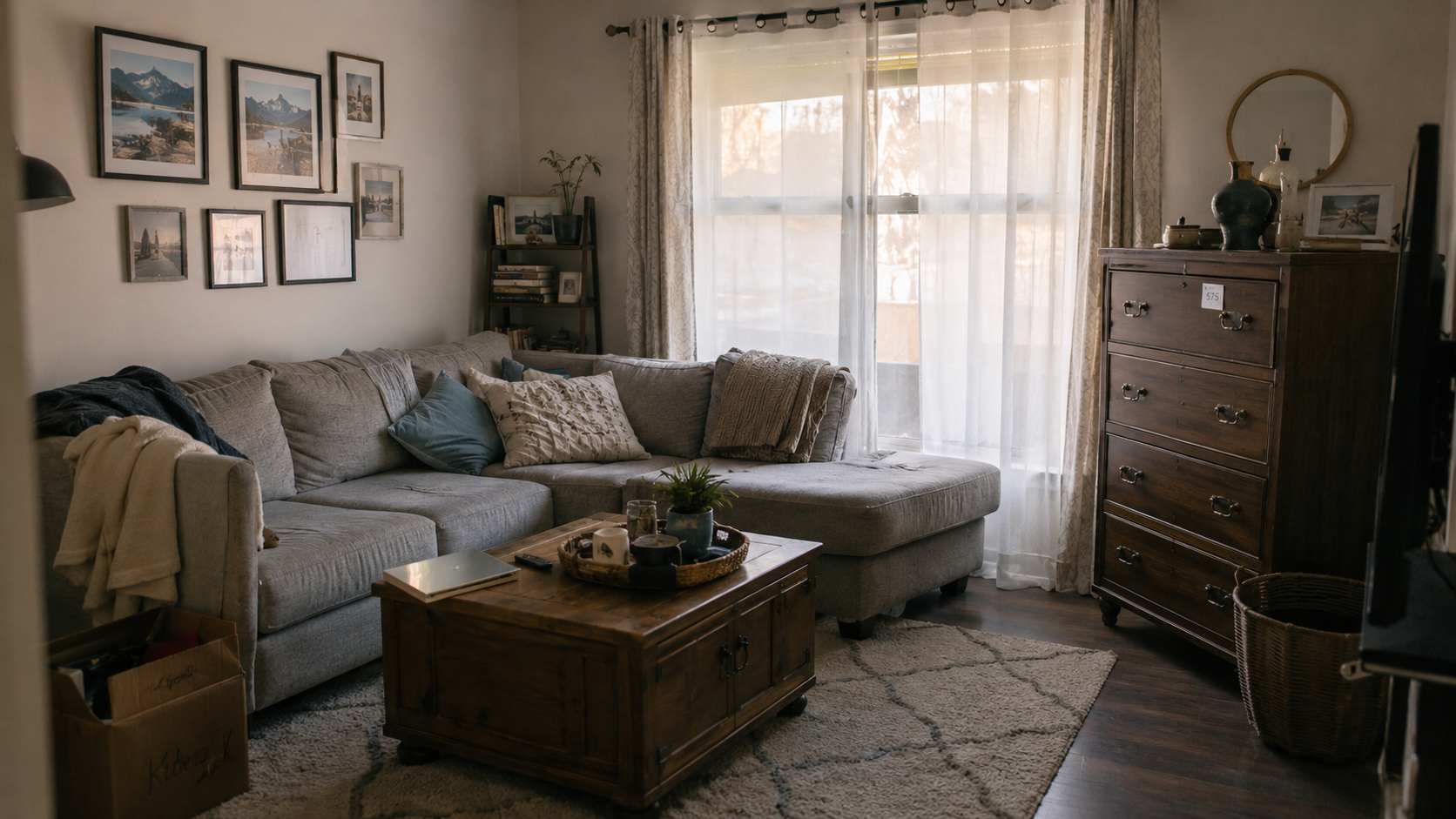
A wide photograph establishes the whole piece. Add close-ups for materials, labels, hardware, and flaws.
- Photograph it in natural light.Take one wide image from the front, another from an angle, and close-ups of the top, legs, hardware, labels, upholstery, and damage.
- Measure the actual piece.Give width, depth, and height. For tables, include leaf sizes; for sectionals, measure each section.
- Name the material honestly.Solid wood, veneer, laminate, particleboard, leather, or fabric matters more than vague terms like “nice quality.”
- Describe the condition.Report stains, odors, smoke or pet exposure, loose joints, scratches, missing hardware, and repairs.
- Explain the pickup.State the floor, stair count, doorway or elevator issues, parking distance, and whether the buyer must bring loading help.
Price the Reality, Not the Memory
Original retail price is useful context, but buyers care more about current demand, condition, style, material, size, and the work required to move the item. Search for comparable local pieces that actually sold when possible—not only listings that remain online.
Decide your lowest acceptable price before messages begin. If the price is firm, say so. If you will consider offers, avoid promising to hold the furniture without a clear pickup time or deposit arrangement you trust.
Honest flaws do not automatically kill a sale. They help the right buyer plan a repair and prevent the wrong buyer from arriving with different expectations.
Plan a Safer, Cleaner Pickup
Share only the location detail needed at each stage. A city and ZIP code are often enough for an initial conversation. Provide a street address after you have agreed on the price, timing, payment method, and who is coming.
Whenever possible, schedule during daylight, have another adult present, keep valuables and private rooms secured, and stage the item in a garage, entry, or other controlled area. Tell the buyer in advance that they are responsible for the vehicle, straps, blankets, dolly, and sufficient help unless you explicitly agree otherwise.
Use a payment method you understand and verify payment yourself. Do not accept overpayments, send refunds to third parties, share one-time account codes, or treat a screenshot as proof that funds arrived.
When More Furniture Needs to Go
If you are clearing a room, downsizing, moving, or handling a loved one’s belongings, avoid creating a separate job for every chair and table. Photograph the groups, list the main pieces, note the approximate quantity, and explain the deadline.
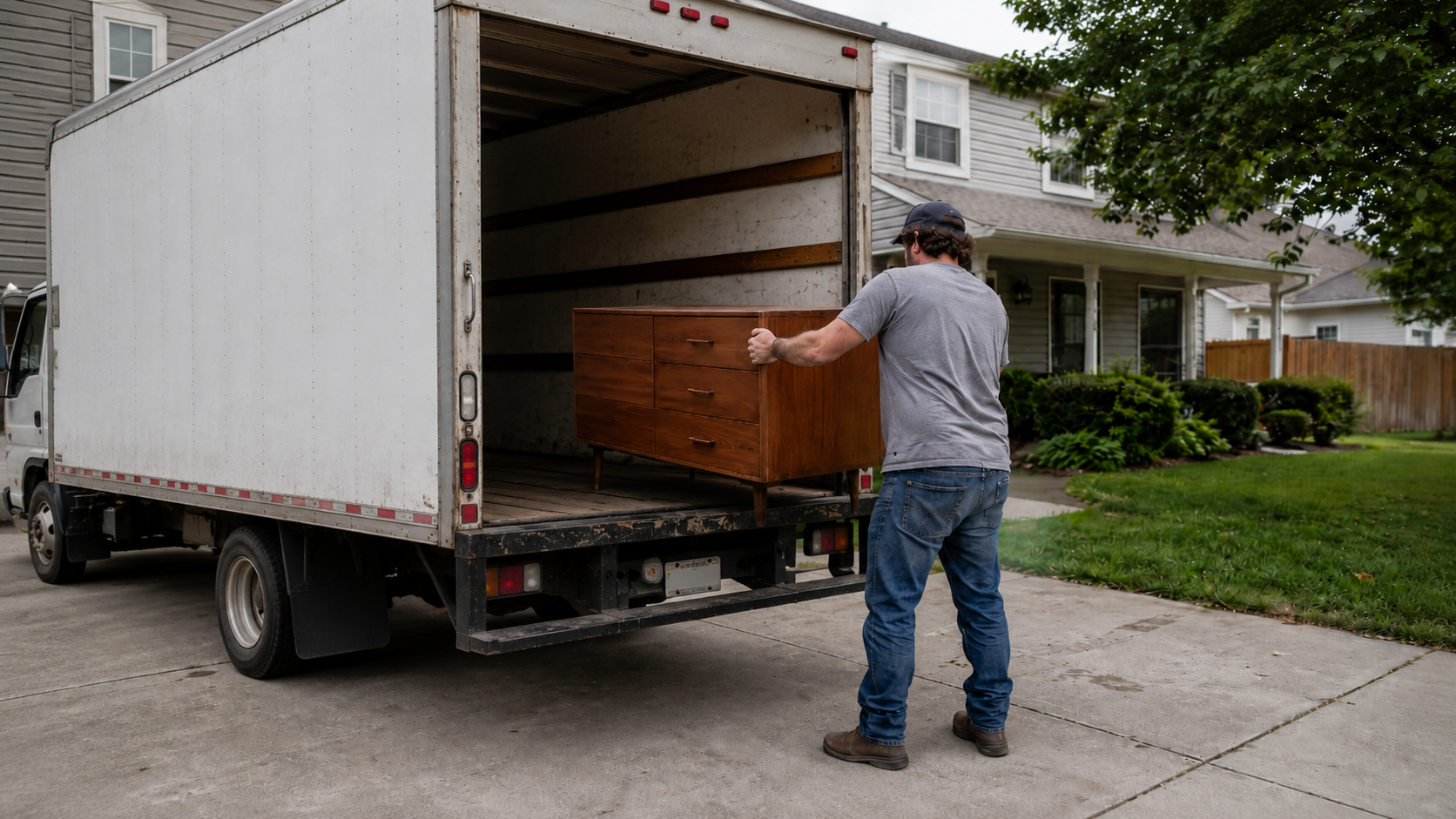
Multiple-piece opportunities can justify the truck, labor, and travel required for a professional buyer.
Resellers and estate buyers are often more interested when they can evaluate several compatible pieces in one visit. They will still need room for resale, so the offer will not equal individual retail prices. The seller’s benefit is fewer appointments, faster removal, and less furniture left behind.
Show the furniture to buyers who move furniture.
Add clear photos, measurements, condition notes, and the pickup situation once. WBT alerts relevant buyers nearby.
Start your free submission →Common Questions
What information helps furniture sell faster?−
Clear photographs, exact measurements, material or brand information, honest condition notes, pickup access, and a realistic deadline help serious buyers decide whether to respond.
Where can I sell used furniture locally?+
Options include public marketplaces, neighborhood groups, consignment shops, auctions, donation organizations, and local buyer-referral networks. The best choice depends on the item, your timeline, and how much work you want to handle.
Should I share my home address in the listing?+
No. Start with a city or general area. Share the exact pickup address privately after agreeing on the buyer, price, timing, and pickup plan.
What furniture details matter most to resellers?+
Construction, style, condition, dimensions, labels or manufacturer, pickup difficulty, and whether related pieces are available together.
Can I submit an entire room or household at once?+
Yes. Group the items by room or category, add several wide photographs, describe the significant pieces, and provide an approximate count and deadline.
Skip the weekend lost to no-shows.
Tell WBT what you have once. Interested local buyers can contact you directly to discuss an offer and arrange pickup.
Submit your furniture free →