
Before You Start, Take a Breath
If you are reading this in the middle of a loss, there is no prize for doing everything immediately and no single correct way to handle a person’s belongings. The goal is to treat their things with care while lifting some of the weight from your own shoulders—not to squeeze the final dollar out of every object.
Start by confirming who has legal authority to make decisions for the estate. If there is an executor, personal representative, will, trust, probate process, or dispute among heirs, pause before selling or giving anything away. Practical cleanup should follow the estate’s legal instructions.
Do not begin with pricing. Begin by protecting the documents, valuables, and memories that cannot be replaced.
Do the Keepsake Pass First
Give family members a chance to identify what carries meaning before anything leaves the home. Photographs, letters, jewelry, recipes, military records, personal papers, heirlooms, artwork, and ordinary objects tied to strong memories deserve their own pass.
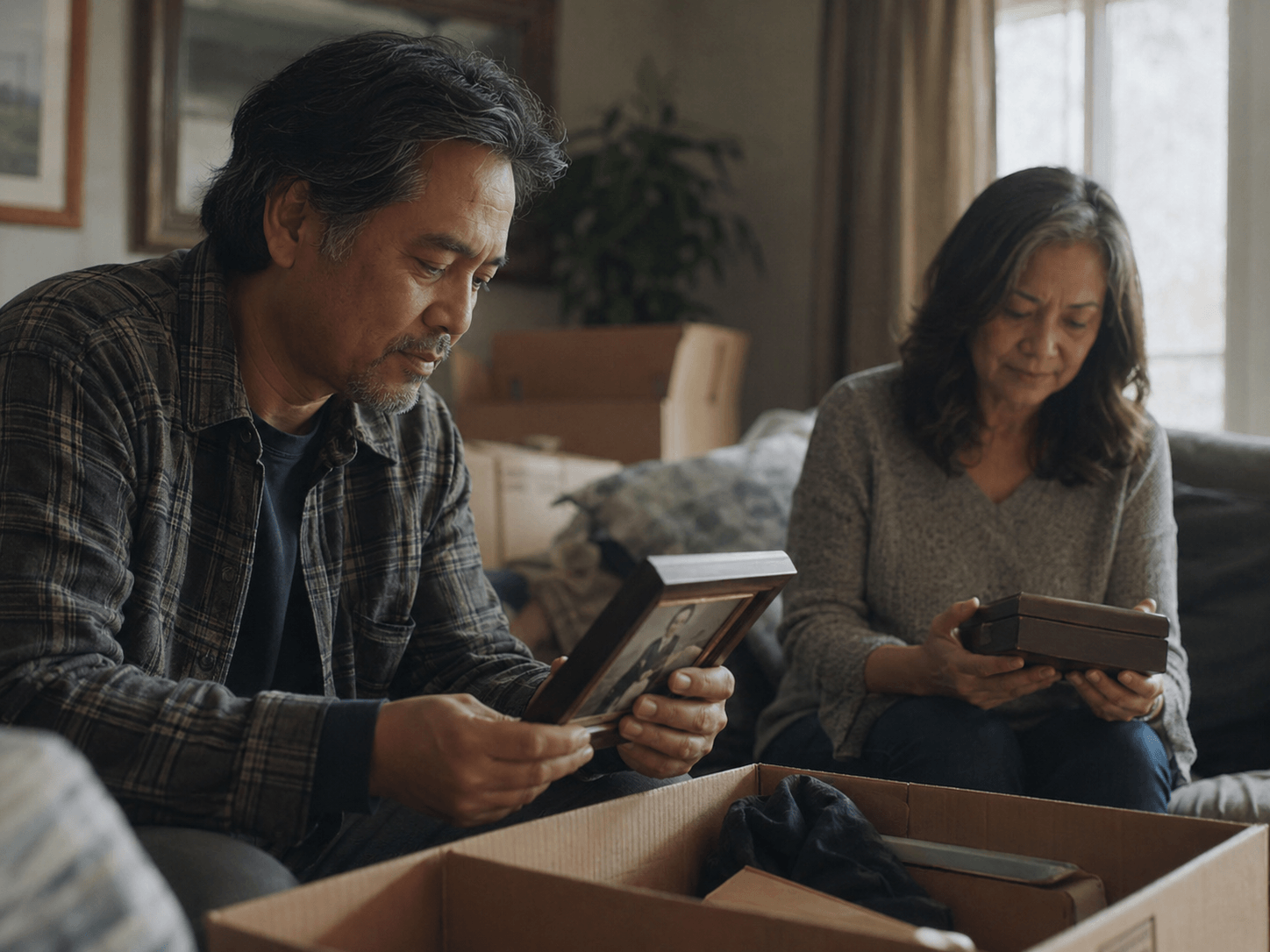
Create a protected area for keepsakes and estate documents before sorting items for sale or donation.
A simple approach is to choose a date, invite relatives to identify what they would like, and record who is receiving what when the estate requires it. Some people will travel in; others may need photographs or a video walkthrough. The point is to give everyone a reasonable chance before decisions become irreversible.
At the same time, set aside financial records, keys, titles, deeds, tax documents, insurance information, checkbooks, computers, phones, medications, firearms, and anything that may require special handling. These should never be mixed into a general sale pile.
Then Decide How to Handle the Rest
After the keepsakes and sensitive items are protected, most homes still contain furniture, appliances, tools, décor, collections, clothing, and everyday household goods. Your options mainly trade time and effort against the amount you may receive.
Sell one item at a time
Potentially the strongest return for select pieces, but every item needs photographs, descriptions, messages, scheduling, and pickup coordination.
Best per-item return · Most workEstate sale
A company organizes and runs a public sale, usually for a commission. It can move volume, though setup takes time and unsold items may remain.
Organized event · CommissionAuction or consignment
Useful for art, antiques, jewelry, or collectibles that fit the seller’s specialty. These businesses are selective and work on their own timelines.
Specialized · Partial solutionOne local buyer
An estate buyer or reseller evaluates a large group and handles pickup. The offer is below individual retail value because speed and removal are part of the exchange.
Fast · Fewer decisionsThe Single-Buyer or Estate-Buyout Option
For many families, the simplest route is a buyer interested in a whole or partial estate. Instead of photographing and selling dozens of pieces separately, you show the buyer the available contents, discuss an offer, and arrange pickup directly.
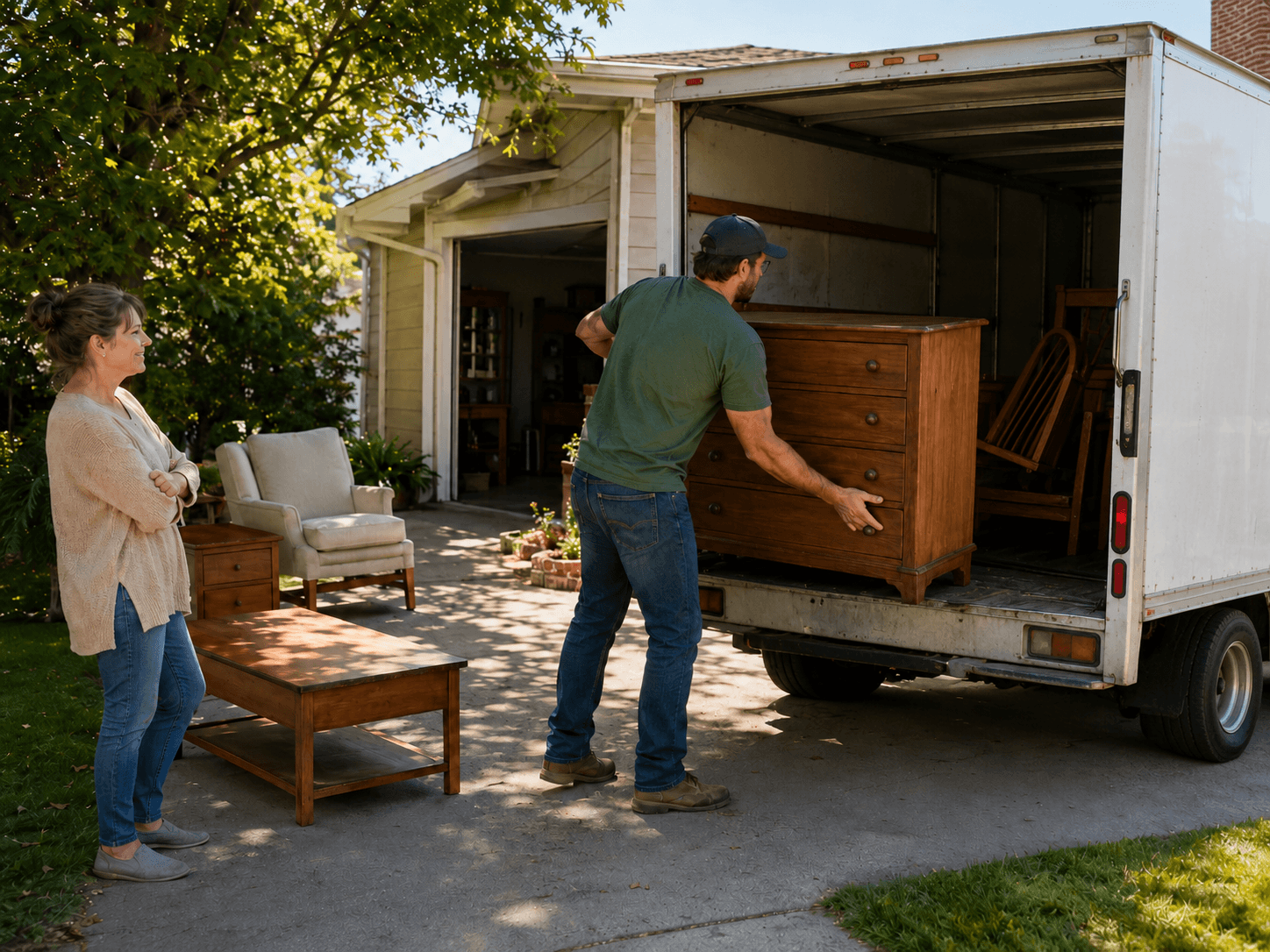
A bulk buyer creates value by evaluating more at once and handling the physical pickup.
This approach does not produce full retail value for every piece. It is an exchange: the buyer needs room to resell, while the family gains speed, fewer appointments, professional loading, and a clear end to the process. That can be especially valuable when relatives live out of state, the home must be listed, or a closing deadline is approaching. Our guide to how an estate buyout works explains the offer, agreement, and pickup process in detail.
Let local estate buyers see what is available.
Submit the main categories, honest descriptions, and several wide photos. WBT alerts buyers whose interests and service areas match the home.
Start your free submission →A Realistic Order of Operations
- Confirm authority and deadlines.Identify the estate representative, legal instructions, property timeline, and any family agreements.
- Protect documents and valuables.Secure financial papers, identity documents, titles, jewelry, firearms, medications, and digital devices.
- Let family identify keepsakes.Create a fair process before sale, donation, or disposal begins.
- Separate items needing expertise.Consider appraisal or specialist advice for jewelry, art, coins, rare collections, and anything you cannot reasonably evaluate.
- Choose a plan for the household bulk.Individual listings, an estate sale, auction, a local bulk buyer, or a combination.
- Donate and dispose last.Let buyers evaluate usable inventory before paying to haul it away.
What About the Things Nobody Wants?
Every home has worn furniture, half-used supplies, mixed boxes, and items with little resale value. Ask potential buyers exactly what they will and will not take. Some will consider mixed lots; others focus on specific categories. Do not assume that a bulk purchase includes a full cleanout unless the agreement says so.
Useful leftovers may go to donation, local reuse groups, recycling, or family. Junk removal should usually come after those steps so you are not paying to remove items that still have value.
Paint, solvents, motor oil, propane tanks, chemicals, medications, batteries, and some electronics require special disposal. Check the county or municipality where the property is located rather than placing them in a sale, donation, or general trash pile.
Common Questions
What should I keep before selling anything?−
Protect estate documents, photographs, letters, heirlooms, personal records, titles, valuables, digital devices, and anything specifically named in a will or requested by family. Confirm legal authority before removing property.
What is the easiest alternative to an estate sale?+
A local estate buyer can evaluate a large group and arrange pickup directly. It is usually faster and simpler than a public sale, but the offer reflects the buyer’s labor, risk, removal, and need for resale margin.
Can I sell the contents without listing every item?+
Yes. Start with categories, honest descriptions, quantities, and wide photographs of each room or group. Interested buyers can ask follow-up questions or arrange a viewing.
Should valuable items be sold separately?+
Potentially. Jewelry, art, coins, rare collections, and high-value antiques may benefit from specialist evaluation. Separate those before arranging a bulk household sale.
Does a bulk buyer clear everything?+
Only if that is specifically agreed upon. Some buyers take a full lot; others select certain categories. Confirm exactly what is included, the price, pickup timing, and cleanup expectations.
You do not have to handle every item separately.
Show relevant local buyers what remains after the family keepsakes are protected. You choose who to speak with, whether to accept an offer, and how pickup will work.
Submit the items free →